

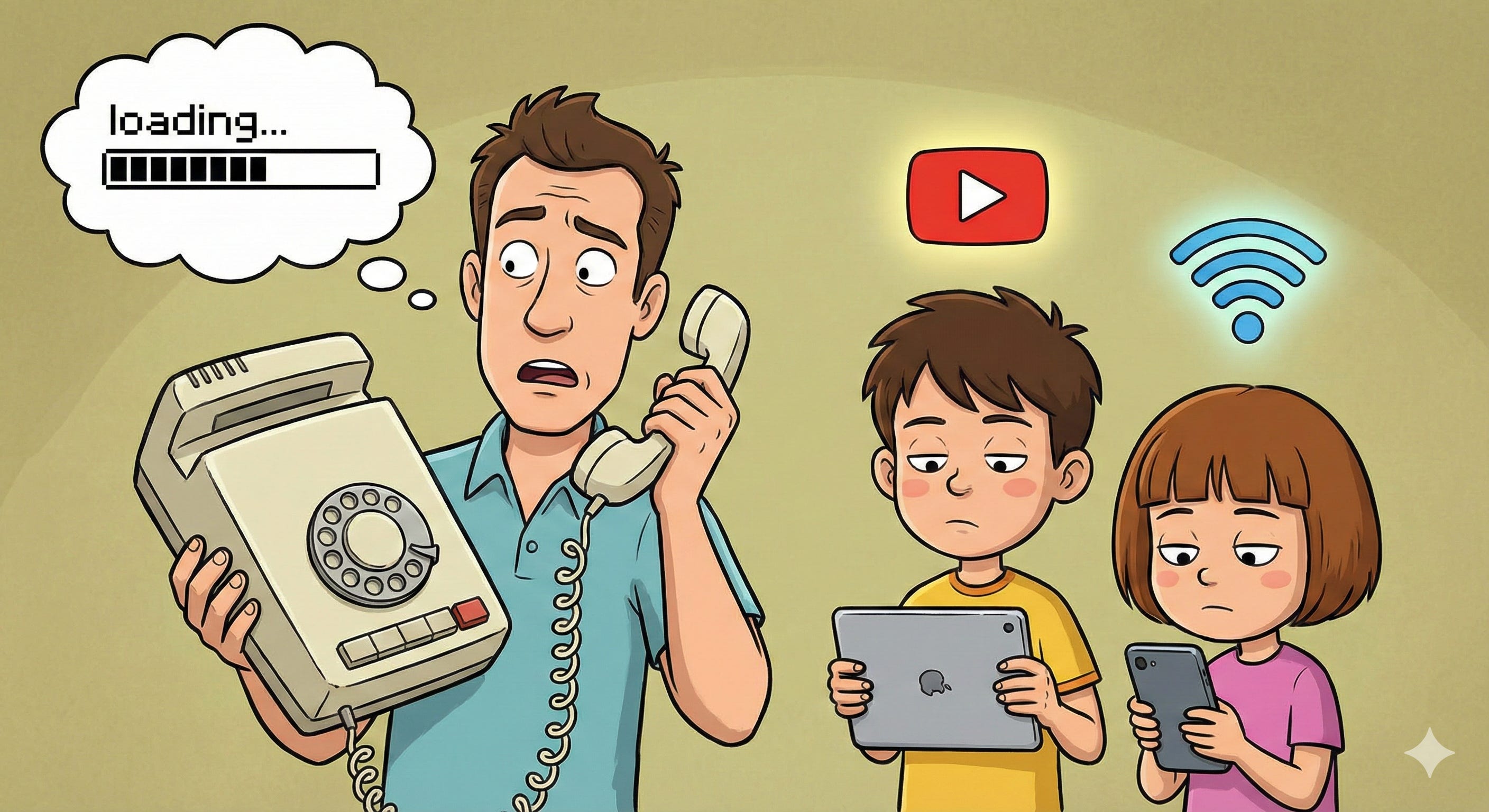
I grew up in the 90s (and early 2000s), which means I grew up with technology—not inside it. Video games happened in the living room. TV meant watching whatever was on, sprinkled with ads. The internet existed, but it was slow, loud, and the most addictive thing available was Runescape—a game that I think was mostly about clicking on trees and rocks.
Now I’m raising three kids in a world where screens are faster, smarter, and everywhere. And yet, my wife and I are trying to give our kids something that looks a lot like what we had.
We call it recreating a 90s childhood—with fewer ads and faster Wi-Fi.
The Tension Every Parent Feels
Here’s the thing: I want technology to make parenting easier. Video calls with grandparents, scheduling apps, educational games that buy us 20 minutes to clean the kitchen—these things help. A lot.
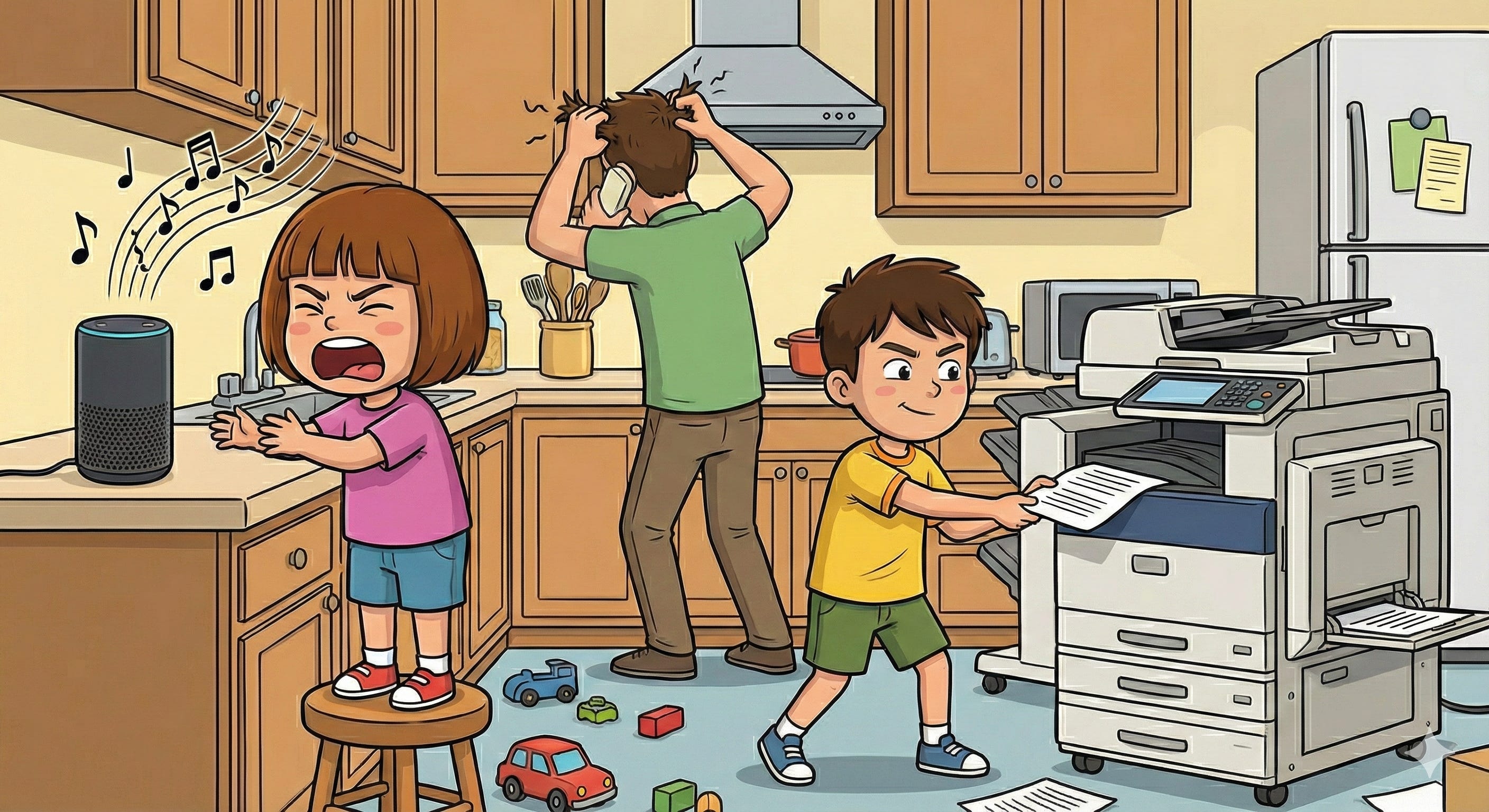
I’m proud that my 3-year-old can summon any song in existence by talking to the kitchen speaker, and my 5-year-old knows how to use the printer better than my wife.
But I’m also terrified. Terrified of addiction. Terrified of algorithmic rabbit holes. Terrified that my kids are losing something I can’t quite name—creativity, boredom, the ability to sit still without a screen.
I don’t think the answer is rejecting technology entirely. The answer is intention.
Our Family’s Rules (And Why They Work)
After a lot of trial and error—emphasis on error—we’ve landed on a set of tech rules that feel right for our family. They’re not perfect. They evolve. But they give us guardrails without turning every screen interaction into a battle.
1. No Short-Form Content
If it’s under 20 minutes, we probably don’t watch it.
YouTube Kids, TikTok-style content, those weird compilations where someone unboxes toys for 47 seconds before cutting to the next thing—all of it trains the brain to expect constant novelty. It’s designed to be addictive.
We stick to shows with actual narrative arcs. Bluey is the obvious exception (7 minutes, but worth every second). Everything we watch has a beginning, middle, and end. The kids have to follow something instead of just consuming.
2. No YouTube Kids
I know. YouTube Kids is supposed to be the “safe” option.
But here’s the thing: the algorithm doesn’t care about your kid’s development. It cares about engagement. And engagement often means bizarre, overstimulating content designed to keep little eyeballs glued to the screen.
We just skip it entirely.
3. Video Games Are a Group Activity
I realize it’s controversial to admit my 3-year-old and 5-year-old play video games. Given how much time older kids lose to them, I get why people are cautious.
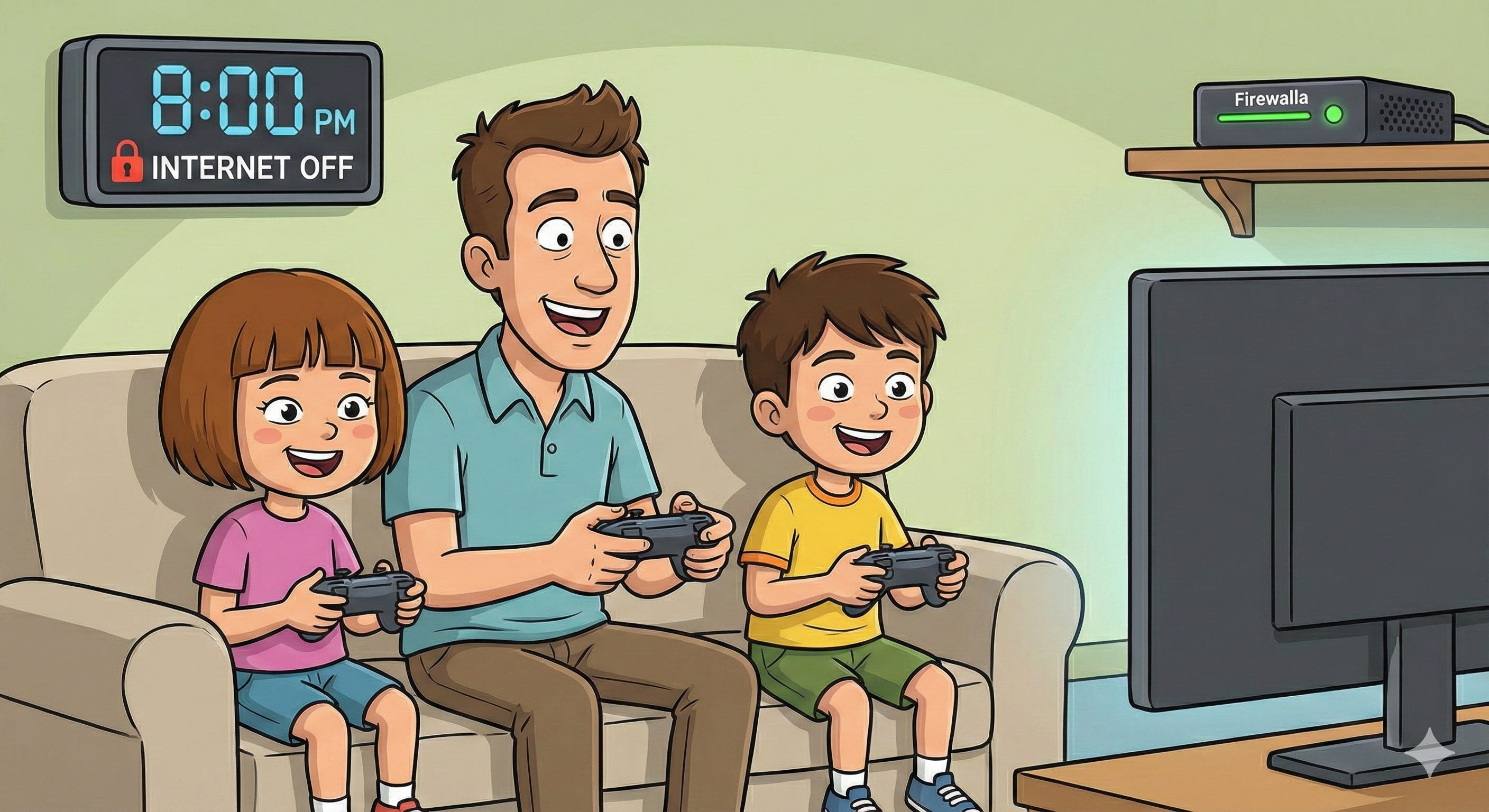
Our rule: all games are played with an adult. I’ve played through Yoshi’s Crafted World with my son at least three times. We’ll both cherish eating all those Shy Guys for the rest of our lives! Even with single-player games, we make sure he’s not playing alone. (We messed this up a few times with Astro Bot, but it’s back under control now.)
You’ll notice these games have a beginning, middle, and end. We’re staying away from unlimited content like Roblox or Minecraft that can suck kids in for hours. Our views might shift as the kids get older—but that’s why the internet has a bedtime.
4. The Internet Has a Bedtime
Our TVs don’t have unlimited internet access. They’re on a schedule.
We use Firewalla to control when the TVs can connect to the internet. After a certain hour? The streaming apps just... don’t work. No negotiation. No “one more episode.” The TV becomes a non-option.
This works in addition to Apple’s Screen Time controls on the kids’ iPads. But we also just try to keep the iPads in a drawer unless we’re going on a trip.
💡 Why Firewalla? It’s a small device that sits on your home network and gives you granular control over every device. You can set schedules, block specific apps or sites, and see exactly what’s happening on your network. It’s not cheap, but for families serious about managing screen time at the network level, it’s been worth it.
The Goal Isn’t Zero Screens
I want to be clear: we’re not anti-technology. My kids use iPads. They watch TV. They play video games. Screens are part of modern childhood, and making them forbidden fruit just makes them more appealing.
But I want my kids to experience what I experienced—boredom that leads to creativity, shared experiences, and the understanding that screens are tools, not babysitters.
The 90s weren’t perfect. But there was something right about how technology fit into our lives back then: useful, but not all-consuming.
That’s what we’re trying to recreate. With better Wi-Fi.
This resonates deeply. The distinction you're making isn't really about screens vs. no screens—it's about intentionality vs. algorithmic manipulation. YouTube Kids operates on the infinite scroll dopamine model, designed to maximize engagement time at any cost. Bluey, meanwhile, is crafted storytelling with natural endpoints and genuine emotional arcs.
What strikes me most is your framing of "dial-up values with fiber optic speeds." You're not rejecting modern technology; you're using it as a tool rather than letting it use your family. That's the core tension every parent faces now: technology can enhance childhood or engineer it for profit. The algorithm doesn't care which.
Curious how you handle the inevitable "but everyone else has it" conversations as the kids get older?